Fall Prevention in Senior Living: A Holistic Approach

The Impact

Over one in four older adults fall each year, leading to 36,000 deaths, three million emergency department visits, and one million hospital stays in America alone.1

Many people who fall, even if they’re not injured, become afraid of falling. This fear may cause a person to cut down on their everyday activities. When a person is less active, they become weaker, increasing their chances of falling. If they have fallen before, their chance of falling again doubles.2

So, not only does falling cause injury, fatalities, and high medical costs, it impacts all areas of wellbeing. It is essential for senior living communities to take steps to prevent falls and protect their residents.

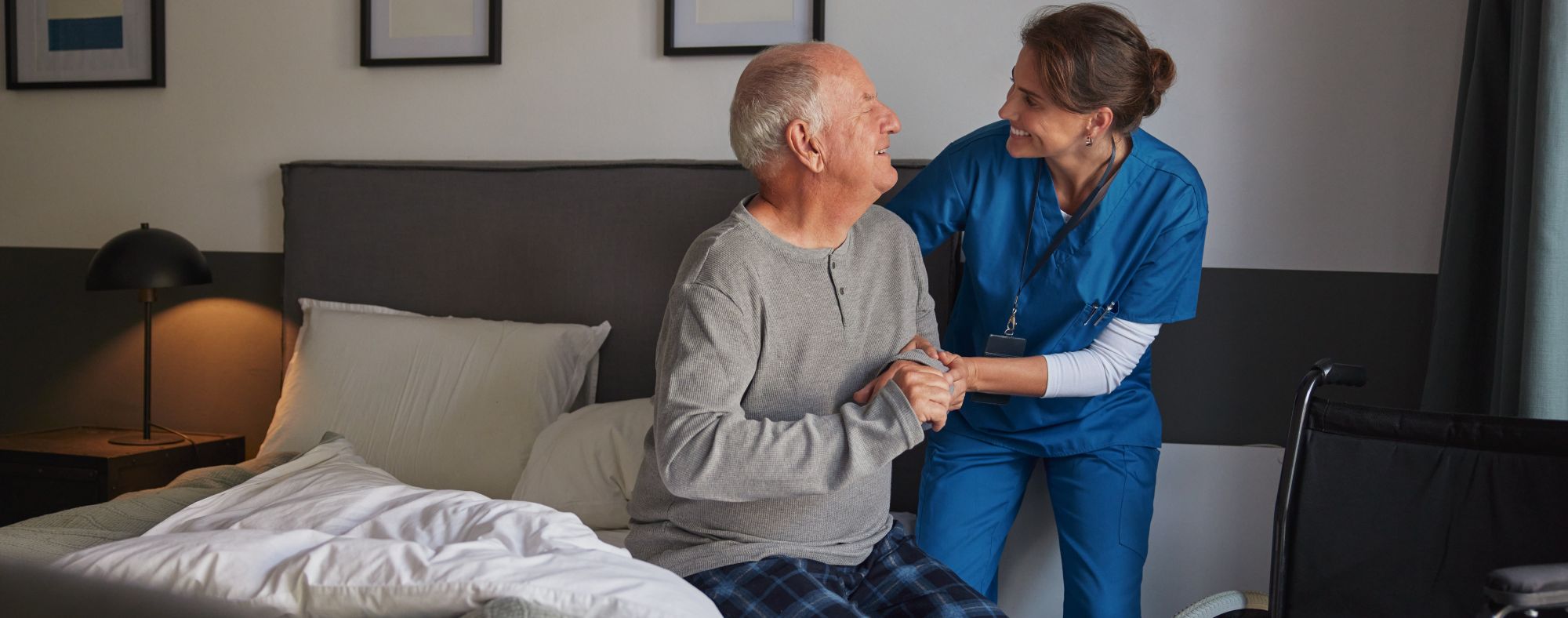
A senior man is sitting in bed and smiling at a caregiver, who is smiling back and helping him up.

Prevent

Prevention is possible. The best approach is holistic: combining strategies that address the environmental, behavioral, and biological risks. These can include safety features like automatic lighting and handrails, exercise programs to improve physical strength, and addressing medical and physical health.


Step One: Assess

The first step is assessing and addressing the risk factors unique to each resident. One way to do this is to use a risk survey. For example, this online quiz from the National Council On Aging quickly and clearly outlines whether an individual is high or low risk, allowing communities to identify individuals who need further support.


Step Two: Environmental

Next, address the physical environment to remove risks and provide support systems. Clear living areas of hazards and ensure safety equipment such as railings, grab bars, and slip-resistant surfaces are installed. Make sure there is adequate lighting in living spaces and community areas. Automatic lighting solutions can sense when a resident is active and turn the lights on to provide immediate visibility.


Step Three: Behavioral

One of the most impactful fall prevention strategies is to build strength and balance. Provide an exercise program with a focus on fall prevention. When residents maintain and grow their mobility, they are less likely to fall. Take a look at the CDC’s “Guide to Implementing Effective Community-Based Fall Prevention Programs” to learn more about how to implement one of these programs.


Step Four: Biological

Finally, check residents for vision, foot, and overall health. Ensure that eye prescriptions are up to date so that a resident can clearly see their surroundings and navigate spaces. With age also often comes loss of feeling in feet, which can contribute to the danger of falling. Ensure residents are wearing proper footwear to support.

Medications and Vitamin D intake can affect fall risk as well. Some medicines or medicine combinations can cause drowsiness, dizziness, and increased fall risk. On the other hand, taking Vitamin D supplements has been shown to decrease falls by 38%.3 Encourage residents to talk to their physician about medication effects and to consider taking Vitamin D supplements.

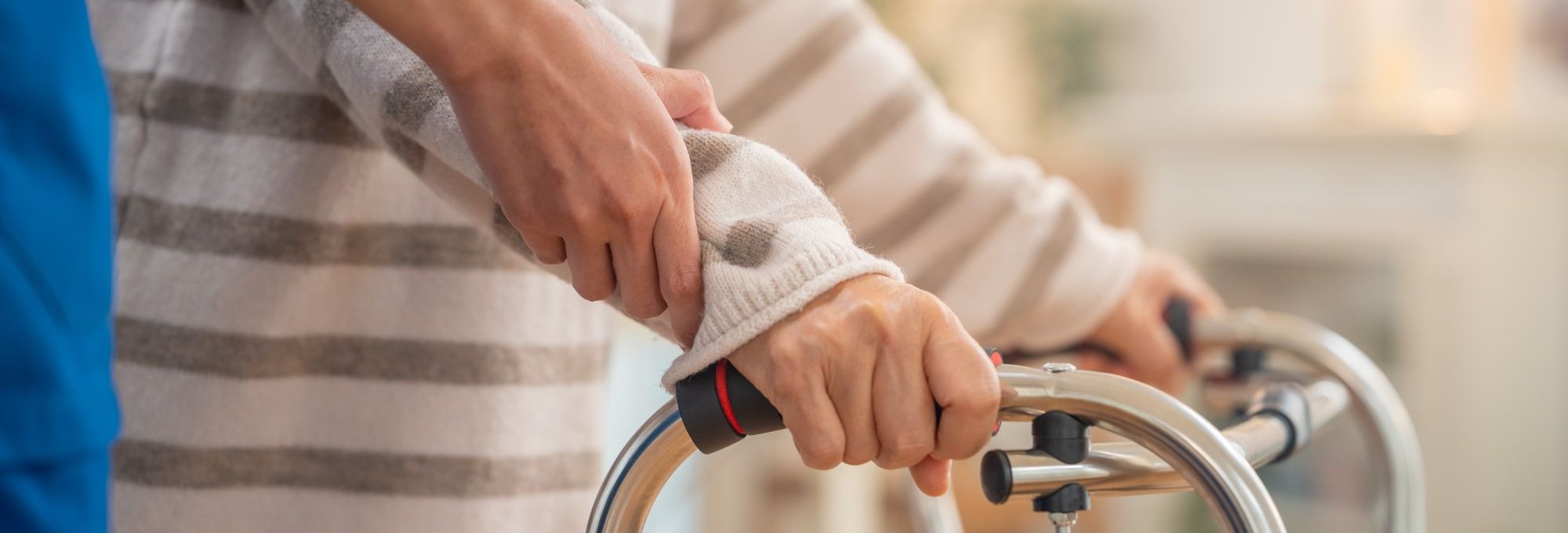
A caregiver holds and guides a senior's wrist as the senior uses a walker.

Protect

Prevention efforts are essential to reduce the number of falls that residents experience. However, it is even more crucial to have a safety net in place for residents who do fall.

Many older adults are unable to get back up after a fall, whether from an injury or a lack of mobility. This can result in a “long lie”, when a person is left on the ground for an hour or more after a fall. These long lies can cause increased injuries, fatalities, and psychological damage.

The first step to address this danger is to once again to identify high-risk residents. When you are aware of who is at risk, you can then equip them with strategies to protect and safeguard against the worst case scenarios.

Educate residents on how to get back up after a fall in cases when they are uninjured. The AARP has provided a guide of step-by-step techniques that can help seniors navigate the aftermath of a fall safely.

Then, invest in fall detection technology. This ensures that falls will not go unnoticed. Instead, caregivers will be immediately alerted in the event of a fall and can respond right away. Not only can this prevent long lies and all the damage associated with them, but they can also catch the falls that go unreported, which can help to identify residents that may be at risk of a worse fall in the future.


Fall Detection

The QUANTUM™ Fall Detection solution consists of pendants that tie into a nurse call system. When the pendant senses that its wearer has fallen, it sends a special alert to caregivers, making sure help is on the way.

Other solutions may use sensors or cameras to detect falls. While this can prove effective, many residents are uncomfortable with a camera in their homes, and prefer to protect their privacy. In addition to this, a camera is only able to catch falls within its view. With the fall detection pendant, a resident can continue living independently throughout their community and stay protected in every room they enter.

Facilities are encouraged to explore their options and find technology that best supports their residents. Learn more about the QUANTUM™ solution here.

A study looked at the effects of fall detection on a resident’s fear of falling and found that they reported feeling more confident, independent, and safer.4 So not only does this technology protect residents in the worst case scenario, it also helps high-risk seniors to maintain their lifestyles and enjoy their communities without fear.

“1 CDC. “Facts about Falls.” Older Adult Fall Prevention, 9 May 2024, ww.cdc.gov/falls/data-research/facts-stats/?CDC_AAref_Val=www.cdc.gov/falls/facts.html.

2 Bloch, Frédéric. “Critical Falls: Why Remaining on the Ground after a Fall Can Be Dangerous, Whatever the Fall.” Journal of the American Geriatrics Society, vol. 60, no. 7, July 2012, pp. 1375–1376, https://doi.org/10.1111/j.1532-5415.2012.04017.x.

3 Gallagher, et al. “Active Vitamin D (Calcitriol) as a Falls Intervention.” 2007.

4 Brownsell, S. and Hawley, M. “Automatic fall detectors and the fear of falling.” Journal of Telemedicine and Telecare, 2004, 10 (5). pp. 262-267. 

Continue reading


What is a “Long Lie”? Discover The Risk That Threatens Older Adults And How To Prevent It

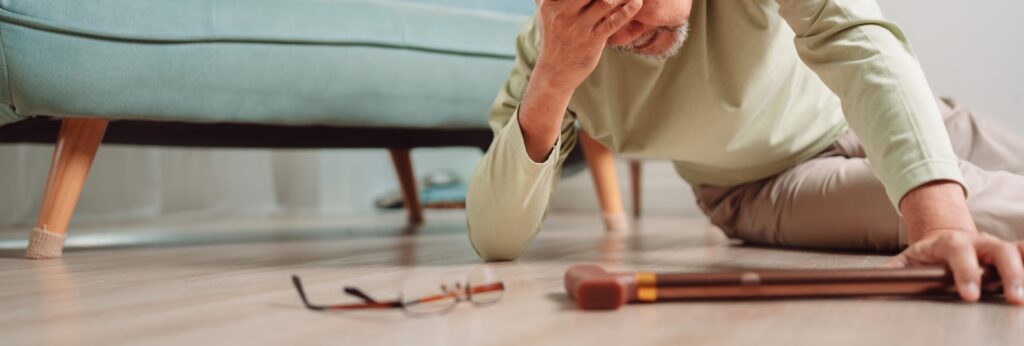
A man lies on the ground with his head in his hand.

The leading cause of death from injury: falls.1

Not only that, but if a senior falls and is unable to get back up for a long period of time, their risk of death doubles.2

Lying on the ground for an extended period of time after a fall is called a “long lie”. One study found that 15% of falls resulted in the person lying on the ground for an hour or longer.3 These long lies can cause serious damage, including dehydration, infections, pressure sores, sepsis, and more.4

In addition to this, the psychological effects can be profound and long-lasting.

Just imagine what it must be like to lie on the floor after a fall, unable to get help.

For many seniors, this results in a fear of falling that can have the opposite effect – causing them to self-isolate, limit their mobility, and thereby increase their fall risk.5

Preventing falls is the first step to take in order to address these issues. Many falls are preventable with proper safety measures. But for the falls that do happen, it is critical for seniors to get help right away.

Facilities often have help buttons and pull cords installed in order to alert caregivers. While this is an essential safety measure, some older adults do not use them when they have the chance. One study showed that 97% of those who experienced a long lie did not activate their call alarm system.3

That is where fall detection comes in.

Technological advancements have made it possible to detect falls right when they happen, alerting caregivers and getting seniors back on their feet.

A good fall detection device needs to strike a balance: too sensitive, and it will release a flurry of false alarms, overwhelming caregivers and causing them to lose trust in the system. If it’s not sensitive enough, it may miss a critical fall.

To address this, the QUANTUM™ Fall Detection pendant is designed with a 30-second verification period, minimizing false alarms while still catching the real ones. The pendant also has a standard help button, so seniors can call for help in addition to the automatic alert.

Together with easy-to-use nurse call software, the QUANTUM™ system ensures that senior living communities have the tools they need to improve safety and reduce risks. 


Some features may be contingent on licensing or subscription. QUANTUM™ systems may require a server upgrade to support new functionality. Residents should be instructed to always push the activation button on their call button to request assistance when they are able to do so, even if fall detection is enabled. The automatic fall detection feature is an enhancement to basic functionality and does not detect 100% of falls.


[1] “WISQARS Fatal and Nonfatal Injury Infographics.” Centers for Disease Control and Prevention, wisqars.cdc.gov/infographics/

[2] Bloch, Frédéric. “Critical Falls: Why Remaining on the Ground after a Fall Can Be Dangerous, Whatever the Fall.” Journal of the American Geriatrics Society, vol. 60, no. 7, July 2012, pp. 1375–1376, https://doi.org/10.1111/j.1532-5415.2012.04017.x.

[3] Fleming, Jane, and Carol Brayne. “Inability to Get up after Falling, Subsequent Time on Floor, and Summoning Help: Prospective Cohort Study in People over 90.” The BMJ, vol. 337, no. 7681, 17 Nov. 2008, https://doi.org/10.1136/bmj.a2227

[4] Kubitza, Jenny, et al. “Concept of the Term Long Lie: A Scoping Review.” European Review of Aging and Physical Activity, vol. 20, no. 1, 29 Aug. 2023, https://doi.org/10.1186/s11556-023-00326-3.

[5] World Health Organization. WHo Global Report on Falls Prevention in Older Age. 2007.

Continue reading