
What to Know About The Updated Requirements for Emergency Response Systems in 651 CMR 12.00
The Executive Office of Aging & Independence (AGE) released new Massachusetts assisted living regulations under 651 CMR 12.00, adopted July 10, 2026.
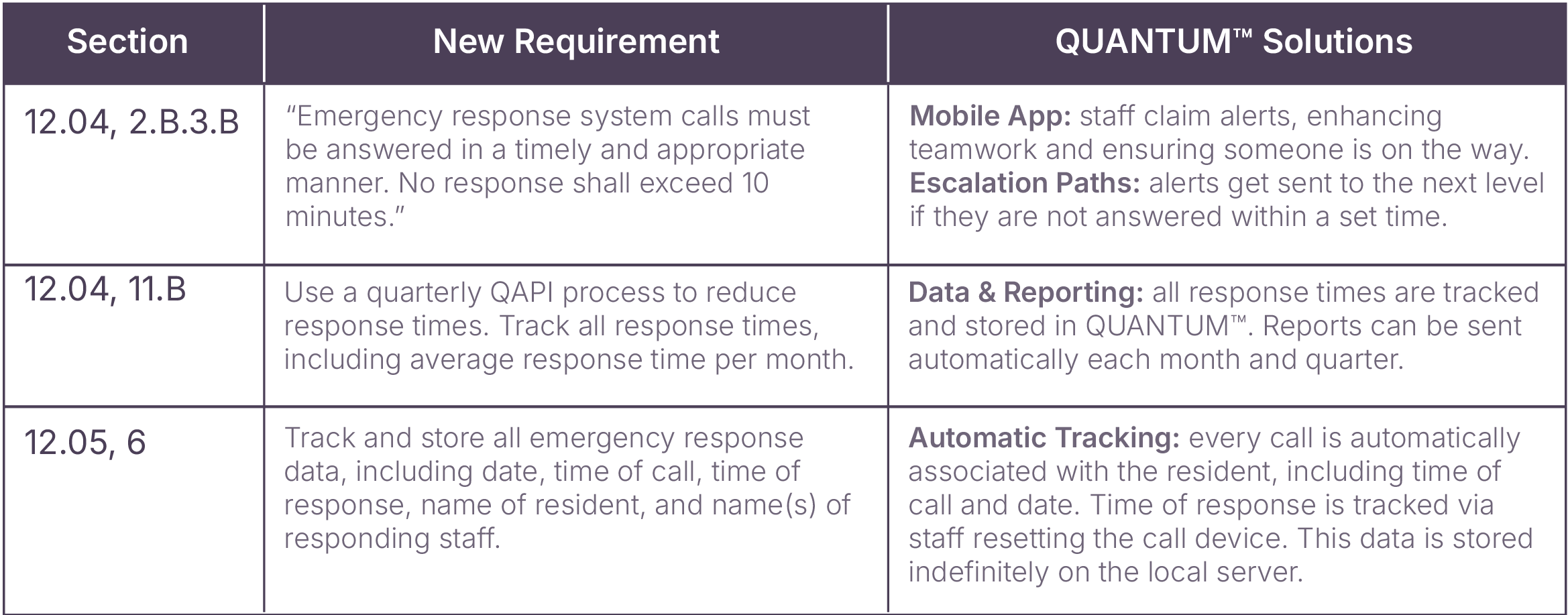
Among some of the updates are specific requirements for emergency call systems and reporting, including tracking emergency call response, tightened response time limits, quarterly improvement requirements, and more.
The QUANTUM™ Senior Safety and Security system is already equipped and experienced with these standards. A unified platform that ties together nurse call, wander management, access control, fall detection, and more, QUANTUM™ delivers detailed data and reporting that addresses these areas and quickly brings communities up to speed with the new requirements.
New Emergency Call Regulations At A Glance
The full documentation for 651 CMR 12.00 is available here. But to make it easier, below is a simple list that compiles some of the new updates and how QUANTUM™ can help.
What To Do
If your Massachusetts assisted living community does not currently have the capabilities to easily track and report on emergency response, QUANTUM™ is the recommended solution. This system can serve as the software layer that pulls together existing infrastructure, or as a full nurse call platform. Either way, you will gain the tools you need to meet the regulations and enhance care.
Talk with the QUANTUM™ team to discuss the best fit for your community.



 IXONIA, W.I., December 1, 2025 — JNL Technologies, Inc. (JNL) is pleased to announce the hiring of industry veteran Brian Vitense as National Sales Director. With over 25 years of experience in the senior living technology market, Vitense brings a relationship-driven approach and extensive industry expertise to JNL as it enters a new phase of growth.